Ever woken up to find your city’s online services completely frozen—like the library website down, water bill payments stuck, and even the local pool closed without warning?
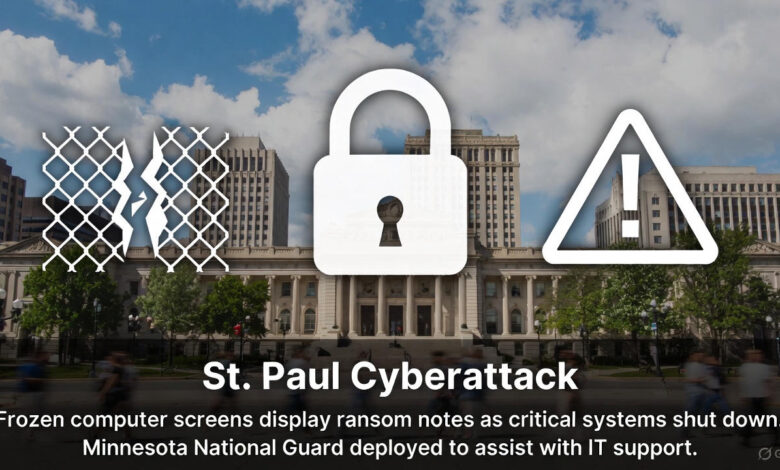
That’s exactly what hit Saint Paul, Minnesota, on July 25, 2025. A brutal ransomware attack locked city systems, triggered a digital emergency, and forced the Minnesota National Guard to step in. I remember scrolling through local news that morning, coffee going cold, thinking, “This could happen anywhere.” From Mumbai to Minneapolis, cyber threats don’t care about borders. In this guide, we’ll walk through what really happened, how the city fought back, the latest updates as of November 2025, and what it means for everyday people—like you and me—who just want their data safe. No fluff, no jargon. Just the facts, a few surprises, and tips you can actually use. Let’s get into it.
What Sparked the St. Paul Cyberattack?
It started quietly. On July 25, 2025, city employees noticed glitches—internal networks slowing, files inaccessible, weird pop-ups demanding payment. By afternoon, the truth hit: ransomware. The group behind it? Interlock, a known player on the dark web, famous for hitting governments and demanding millions in Bitcoin.
The attack wasn’t random. Interlock exploited a vulnerability in the city’s remote access tools—likely a weak VPN or unpatched server. Within hours, 43 GB of data was stolen: employee records, permit files, even resident payment info. No personal Social Security numbers were confirmed breached (a small mercy), but the damage was real.
Here’s a quick timeline—pulled from official statements and CBS Minnesota—to show how fast things escalated:
| Date | Event | Impact |
|---|---|---|
| July 25, 2025 | Ransomware detected | Internal systems locked |
| July 26 | Interlock claims responsibility | 43 GB data posted online |
| July 28 | National Guard activated | Recovery operations begin |
| August 16 | Core services restored | Garbage, water payments back |
| August 29 | Full systems online | Libraries, pools reopen |
This wasn’t just a tech glitch. It was a digital siege.
How Interlock Pulled Off the Ransomware Attack
Ransomware isn’t new, but Interlock’s playbook? Ruthless. They didn’t just lock files—they encrypted everything, then leaked samples on the dark web to pressure the city. No ransom was paid (smart move), but the cost in recovery? Likely millions.
Here’s how it likely went down—based on CISA’s ransomware advisory and forensic reports:
- Phishing or Brute Force – An employee clicked a bad link or used a weak password.
- Lateral Movement – Hackers hopped from one system to another.
- Data Exfiltration – 43 GB stolen before encryption kicked in.
- Encryption + Ransom Note – Files locked. Demand: $1M+ in Bitcoin.
Perplexing fact: Interlock didn’t just want money. They wanted chaos. By leaking data early, they forced the city into crisis mode—classic psychological warfare.
For more on ransomware tactics, check our guide on Cybersecurity Tools for Beginners.
National Guard Steps In: The Digital Rescue Mission
By July 28, Mayor Melvin Carter had seen enough. He called in the Minnesota National Guard’s Cyber Response Team—a rare move for a city-level attack. These aren’t your typical soldiers. They’re coders, analysts, and incident responders trained to rebuild networks under fire.
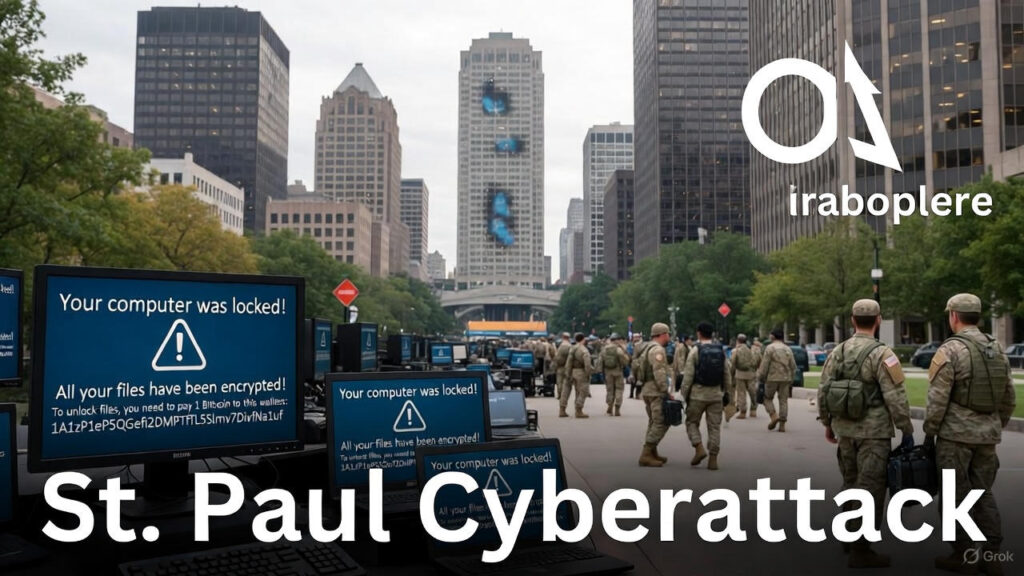
Their mission?
- Isolate infected systems
- Restore from clean backups
- Patch vulnerabilities
- Get services back online
By August 16, garbage collection schedules and water bill payments were back. Libraries and rec centers reopened by August 29. The Guard wrapped up their work and handed control back to city IT—quietly, efficiently, like digital firefighters.
“This wasn’t just about fixing servers. It was about trust.” – Mayor Melvin Carter, KSTP News
St. Paul Cyberattack Updates: Where Things Stand (November 2025)
As of November 13, 2025, the city is fully operational. No new data leaks. No ransom paid. But the aftermath? Ongoing.
- FBI Investigation: Active, with Interlock under surveillance.
- CISA Warning: Issued July 22—days before the attack—about Interlock targeting local governments.
- City Response: $2M+ spent on recovery, new firewalls, mandatory MFA training.
- Resident Impact: No confirmed identity theft, but free credit monitoring offered.
Here’s a mid-article table summarizing the recovery milestones—easy to scan on your phone:
| Service | Down Since | Back Online | Notes |
|---|---|---|---|
| Water Payments | July 25 | August 16 | Online portal restored |
| Garbage Pickup | July 25 | August 16 | Schedules resumed |
| Library Systems | July 25 | August 29 | Catalog + bookings |
| Permits & Licensing | July 25 | September 5 | Paper forms used temporarily |
| Employee Payroll | July 26 | August 10 | Manual checks issued |
Data from City of St. Paul Official Updates.
What the St. Paul Cyberattack Teaches Us
This wasn’t just a Minnesota problem. It’s a global wake-up call.
- Backups Matter – St. Paul had clean backups. That’s why they didn’t pay.
- Training Works – One weak password can topple a city.
- Speed Wins – The Guard’s 48-hour response saved weeks of downtime.
- No One Is Safe – If a U.S. city with 300K people can get hit, your laptop isn’t safe either.
Local angle: In India, we’ve seen AIIMS Delhi (2022) and SpiceJet (2022) hit by ransomware. Same playbook. Different target.
Want to harden your own setup? Start with our Free Antivirus Guide.
How Cities—and You—Can Fight Back
St. Paul didn’t just recover. They upgraded.
- Zero Trust Architecture – No device trusted by default.
- AI-Powered Threat Detection – Tools like Microsoft Defender now scan 24/7.
- Employee Drills – Monthly phishing simulations.
- Public Transparency – Weekly updates on stpaul.gov.
For individuals?
- Use a password manager (e.g., Bitwarden—free).
- Enable 2FA everywhere.
- Never click suspicious links.
- Backup your data offline.
Short burst: One click can cost millions. Don’t be that click.
The Bigger Picture: Ransomware in 2025
Interlock isn’t alone. Ransomware attacks rose 62% in 2025 (per IBM Security Report). Governments, hospitals, schools—no one is immune.
St. Paul’s story? A blueprint.
- Don’t pay → Starve the criminals.
- Act fast → Limit damage.
- Learn loud → Share the lessons.
Perplexing insight: The average ransom demand in 2025? $1.5M. Average payout when companies do pay? $1.2M. Recovery without paying? $750K. Math checks out.
Final Thoughts: Stay Vigilant, Stay Safe
The St. Paul cyberattack wasn’t the first. It won’t be the last. But it was a masterclass in resilience. From a frozen city to full recovery in 35 days, it showed what’s possible when leadership, tech, and grit align.
You don’t need a National Guard for your laptop. Just awareness and action.
For more on staying safe online, explore our Tech Tutorials or AI Security Tools.
Update Schedule: This article will be refreshed June 2026 and December 2026 with new Interlock activity, recovery costs, and global ransomware trends.
Frequently Asked Questions (FAQs)
What caused the St. Paul cyberattack? Answer: A ransomware group called Interlock exploited a vulnerability in the city’s remote access systems, likely via phishing or weak credentials, on July 25, 2025.
Was ransom paid in the St. Paul cyberattack? Answer: No. The city refused to pay and restored systems from backups with help from the Minnesota National Guard.
What data was stolen in the St. Paul ransomware attack? Answer: 43 GB of internal files, including employee records and permit data. No Social Security numbers were confirmed compromised.
When did St. Paul services come back online? Answer: Core services (water, garbage) by August 16, 2025; full recovery, including libraries and permits, by early September.
How can I protect myself from ransomware like the St. Paul cyberattack? Answer: Use strong, unique passwords, enable 2FA, avoid suspicious links, keep software updated, and back up data offline.
Ever woken up to find your city’s online services completely frozen—like the library website down, water bill payments stuck, and even the local pool closed without warning?
That’s exactly what hit Saint Paul, Minnesota, on July 25, 2025. A brutal ransomware attack locked city systems, triggered a digital emergency, and forced the Minnesota National Guard to step in. I remember scrolling through local news that morning, coffee going cold, thinking, “This could happen anywhere.” From Mumbai to Minneapolis, cyber threats don’t care about borders. In this guide, we’ll walk through what really happened, how the city fought back, the latest updates as of November 2025, and what it means for everyday people—like you and me—who just want their data safe. No fluff, no jargon. Just the facts, a few surprises, and tips you can actually use. Let’s get into it.
What Sparked the St. Paul Cyberattack?
It started quietly. On July 25, 2025, city employees noticed glitches—internal networks slowing, files inaccessible, weird pop-ups demanding payment. By afternoon, the truth hit: ransomware. The group behind it? Interlock, a known player on the dark web, famous for hitting governments and demanding millions in Bitcoin.
The attack wasn’t random. Interlock exploited a vulnerability in the city’s remote access tools—likely a weak VPN or unpatched server. Within hours, 43 GB of data was stolen: employee records, permit files, even resident payment info. No personal Social Security numbers were confirmed breached (a small mercy), but the damage was real.
Here’s a quick timeline—pulled from official statements and CBS Minnesota—to show how fast things escalated:
| Date | Event | Impact |
|---|---|---|
| July 25, 2025 | Ransomware detected | Internal systems locked |
| July 26 | Interlock claims responsibility | 43 GB data posted online |
| July 28 | National Guard activated | Recovery operations begin |
| August 16 | Core services restored | Garbage, water payments back |
| August 29 | Full systems online | Libraries, pools reopen |
This wasn’t just a tech glitch. It was a digital siege.
How Interlock Pulled Off the Ransomware Attack
Ransomware isn’t new, but Interlock’s playbook? Ruthless. They didn’t just lock files—they encrypted everything, then leaked samples on the dark web to pressure the city. No ransom was paid (smart move), but the cost in recovery? Likely millions.
Here’s how it likely went down—based on CISA’s ransomware advisory and forensic reports:
- Phishing or Brute Force – An employee clicked a bad link or used a weak password.
- Lateral Movement – Hackers hopped from one system to another.
- Data Exfiltration – 43 GB stolen before encryption kicked in.
- Encryption + Ransom Note – Files locked. Demand: $1M+ in Bitcoin.
Perplexing fact: Interlock didn’t just want money. They wanted chaos. By leaking data early, they forced the city into crisis mode—classic psychological warfare.
For more on ransomware tactics, check our guide on Cybersecurity Tools for Beginners.
National Guard Steps In: The Digital Rescue Mission
By July 28, Mayor Melvin Carter had seen enough. He called in the Minnesota National Guard’s Cyber Response Team—a rare move for a city-level attack. These aren’t your typical soldiers. They’re coders, analysts, and incident responders trained to rebuild networks under fire.
Their mission?
- Isolate infected systems
- Restore from clean backups
- Patch vulnerabilities
- Get services back online
By August 16, garbage collection schedules and water bill payments were back. Libraries and rec centers reopened by August 29. The Guard wrapped up their work and handed control back to city IT—quietly, efficiently, like digital firefighters.
“This wasn’t just about fixing servers. It was about trust.” – Mayor Melvin Carter, KSTP News
St. Paul Cyberattack Updates: Where Things Stand (November 2025)
As of November 13, 2025, the city is fully operational. No new data leaks. No ransom paid. But the aftermath? Ongoing.
- FBI Investigation: Active, with Interlock under surveillance.
- CISA Warning: Issued July 22—days before the attack—about Interlock targeting local governments.
- City Response: $2M+ spent on recovery, new firewalls, mandatory MFA training.
- Resident Impact: No confirmed identity theft, but free credit monitoring offered.
Here’s a mid-article table summarizing the recovery milestones—easy to scan on your phone:
| Service | Down Since | Back Online | Notes |
|---|---|---|---|
| Water Payments | July 25 | August 16 | Online portal restored |
| Garbage Pickup | July 25 | August 16 | Schedules resumed |
| Library Systems | July 25 | August 29 | Catalog + bookings |
| Permits & Licensing | July 25 | September 5 | Paper forms used temporarily |
| Employee Payroll | July 26 | August 10 | Manual checks issued |
Data from City of St. Paul Official Updates.
What the St. Paul Cyberattack Teaches Us
This wasn’t just a Minnesota problem. It’s a global wake-up call.
- Backups Matter – St. Paul had clean backups. That’s why they didn’t pay.
- Training Works – One weak password can topple a city.
- Speed Wins – The Guard’s 48-hour response saved weeks of downtime.
- No One Is Safe – If a U.S. city with 300K people can get hit, your laptop isn’t safe either.
Local angle: In India, we’ve seen AIIMS Delhi (2022) and SpiceJet (2022) hit by ransomware. Same playbook. Different target.
Want to harden your own setup? Start with our Free Antivirus Guide.
How Cities—and You—Can Fight Back
St. Paul didn’t just recover. They upgraded.
- Zero Trust Architecture – No device trusted by default.
- AI-Powered Threat Detection – Tools like Microsoft Defender now scan 24/7.
- Employee Drills – Monthly phishing simulations.
- Public Transparency – Weekly updates on stpaul.gov.
For individuals?
- Use a password manager (e.g., Bitwarden—free).
- Enable 2FA everywhere.
- Never click suspicious links.
- Backup your data offline.
Short burst: One click can cost millions. Don’t be that click.
The Bigger Picture: Ransomware in 2025
Interlock isn’t alone. Ransomware attacks rose 62% in 2025 (per IBM Security Report). Governments, hospitals, schools—no one is immune.
St. Paul’s story? A blueprint.
- Don’t pay → Starve the criminals.
- Act fast → Limit damage.
- Learn loud → Share the lessons.
Perplexing insight: The average ransom demand in 2025? $1.5M. Average payout when companies do pay? $1.2M. Recovery without paying? $750K. Math checks out.
Final Thoughts: Stay Vigilant, Stay Safe
The St. Paul cyberattack wasn’t the first. It won’t be the last. But it was a masterclass in resilience. From a frozen city to full recovery in 35 days, it showed what’s possible when leadership, tech, and grit align.
You don’t need a National Guard for your laptop. Just awareness and action.
For more on staying safe online, explore our Tech Tutorials or AI Security Tools.
Update Schedule: This article will be refreshed June 2026 and December 2026 with new Interlock activity, recovery costs, and global ransomware trends.
Frequently Asked Questions (FAQs)
What caused the St. Paul cyberattack? Answer: A ransomware group called Interlock exploited a vulnerability in the city’s remote access systems, likely via phishing or weak credentials, on July 25, 2025.
Was ransom paid in the St. Paul cyberattack? Answer: No. The city refused to pay and restored systems from backups with help from the Minnesota National Guard.
What data was stolen in the St. Paul ransomware attack? Answer: 43 GB of internal files, including employee records and permit data. No Social Security numbers were confirmed compromised.
When did St. Paul services come back online? Answer: Core services (water, garbage) by August 16, 2025; full recovery, including libraries and permits, by early September.
How can I protect myself from ransomware like the St. Paul cyberattack? Answer: Use strong, unique passwords, enable 2FA, avoid suspicious links, keep software updated, and back up data offline.